This page is part of Gloshell’s Coupang Partners activity, and Gloshell receives a set commission on purchases made through it.


What the ingredients say
Read from the label order, stated amounts and each ingredient’s clinical evidence
Tranexamic Acid, with clinical evidence for dark spots, is in, likely at the amount studies used.
Niacinamide, with clinical evidence for oiliness, is in, likely at the amount studies used.
- fragrance
- 1 labelled fragrance allergen
MFDS functional cosmetic filing
Filed with Korea's MFDS as a brightening functional cosmetic (2025-11). Its efficacy ingredient and amount are those the MFDS notice names.
Best-supported ingredient per concern
- Dark spotsTranexamic Acidevidence B+likely enough
- OilinessNiacinamideevidence B-likely enough
- Skin barrierNiacinamideevidence B-likely enough
- BlemishesNiacinamideevidence B-likely enough
- PoresNiacinamideevidence Clikely enough
- LinesNiacinamideevidence Clikely enough
Evidence-graded ingredients and how much is in
No amount is stated. Judging by 33 products that state it at this place on the label, the chance it reaches the amount studies used is about 84%.
Dark spots B+
No amount is stated. Judging by 254 products that state it at this place on the label, the chance it reaches the amount studies used is about 93%.
Dark spots B · Oiliness B- · Skin barrier B- · Blemishes B- · Pores C · Lines C
No amount is stated. Judging by 155 products that state it at this place on the label, the chance it reaches the amount studies used is about 59%.
Skin barrier B+ · Dryness C
No amount is stated. Judging by products that state an evidence-graded ingredient at this place on the label, the chance it reaches the amount studies used is about 61%.
Skin barrier B · Dryness B-
No amount is stated. Judging by 16 products that state it at this place on the label, the chance it reaches the amount studies used is about 44%.
Lines C · Dryness C · Pores C
5 more evidence-graded ingredients
No amount is stated. Judging by 16 products that state it at this place on the label, the chance it reaches the amount studies used is about 2%.
Dark spots B-
No amount is stated. Judging by 16 products that state it at this place on the label, the chance it reaches the amount studies used is about 2%.
Dark spots C · Lines C
No amount is stated. Judging by 36 products that state it at this place on the label, the chance it reaches the amount studies used is about 1%.
Lines C · Dark spots D
No amount is stated. Judging by 80 products that state it at this place on the label, the chance it reaches the amount studies used is about 0%.
Lines D
It comes after a preservative the law caps at 4%, so it is at most 4% — short of what studies used (10–20%).
Dark spots B+ · Lines B · Firmness C
Amounts on the label
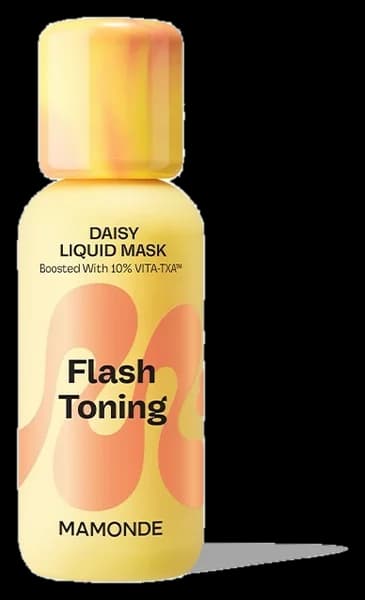
- Bellis Perennis (Daisy) Flower Extract0.005%trace (under 0.1%)
Korean law requires a product to state the amount of any ingredient in its name.
How this was read
Labels list ingredients above 1% from most to least, then those at 1% or less in any order. A product filed with Korea's MFDS as functional is read as holding the notified amount of its efficacy ingredient when the label carries only one for that effect, and anything listed before an ingredient of known amount as holding at least that much. Amounts in the product name or official description are used only where the label order allows them. Where no amount is stated, the chance of reaching the study amount comes from other products that state the same ingredient at the same place on their labels. Evidence grades were set by reading each ingredient's studies.
- A
- several randomised trials or a meta-analysis
- B
- one or two randomised trials
- C
- uncontrolled or multi-ingredient studies
- D
- lab work or a record only
A reading of ingredient evidence and the label, not a guarantee that this product works.
Ingredients
Full ingredient list as published on the official product page, in descending order of content.
All 30 ingredients at a glance
Colours follow each ingredient’s use (CosIng functions); the bar counts names. Not amounts, not a safety score.
Aqua, Propylene Glycol, Niacinamide, Gluconolactone, Butylene Glycol, Tranexamic Acid, Panthenol, Dipropylene Glycol, 1,2-Hexanediol, Dimethicone, Betaine, PCA Dimethicone, PPG-13-Decyltetradeceth-24, Boron Nitride, Estimated 1% or less from hereCarbomer, Tromethamine, Ethylhexylglycerin, 3-O-Ethyl Ascorbic Acid, Sphingomonas Ferment Extract, Xanthan GUM, Parfum, Sodium Metaphosphate, Rose Extract, Bellis Perennis (Daisy) Flower Extract50ppm, Limonene⁎, Tocopherol, Ascorbic Acid, Tocopheryl Acetate, Ascorbyl Glucoside, Ascorbyl Tetraisopalmitate
Tap a name to see what it does and the evidence
Declared fragrance allergens
The label marks these as fragrance allergens that must be declared. They are not impurities, and most people do not react to them.