
Humectant, Emollient, Occlusive: Understand Moisture by Routine Order
A clear guide to reading hydration ingredients by texture and routine order instead of memorizing ingredient names.
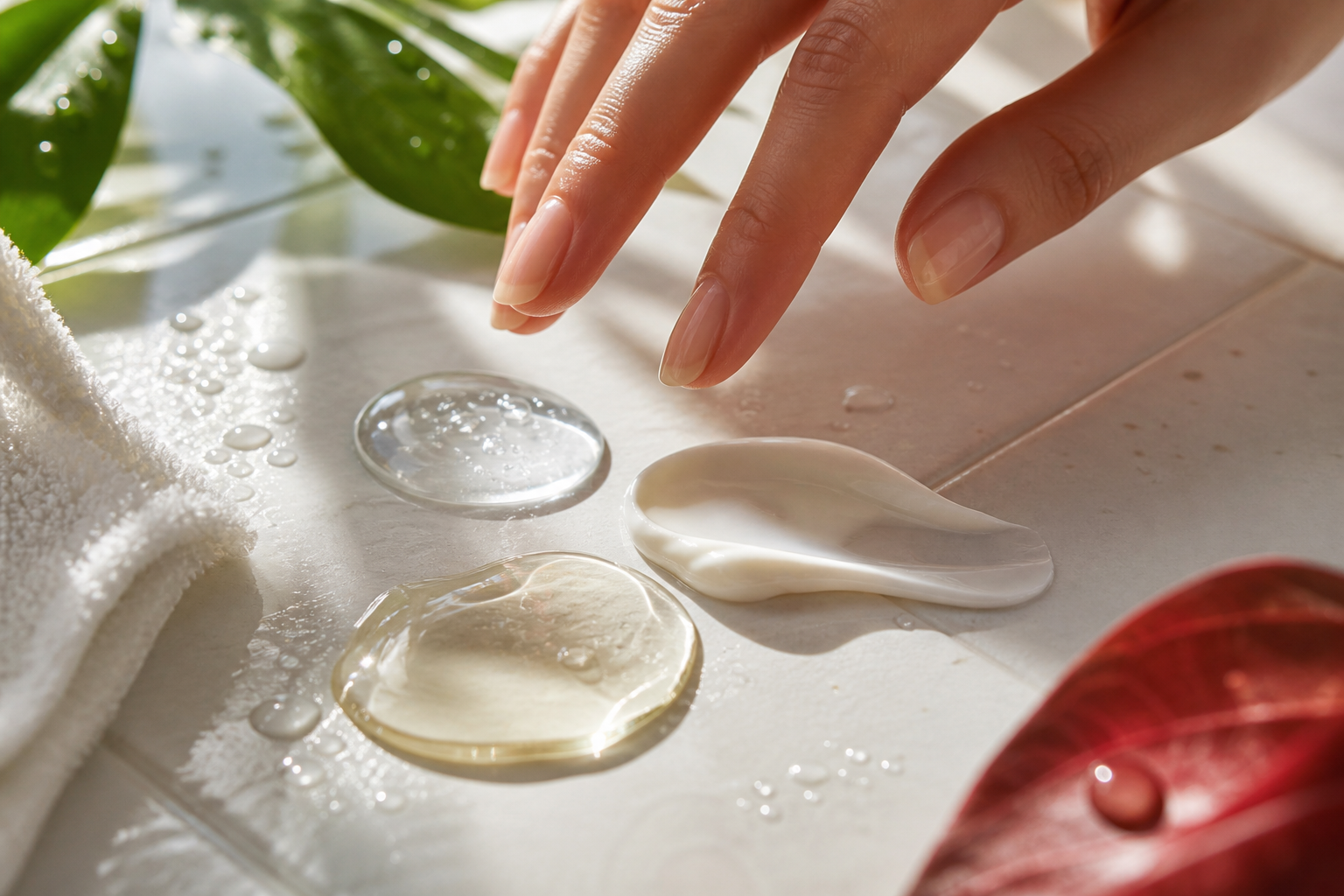
Understanding humectant, emollient, occlusive, and moisturizing ingredients in that order.
What makes ordering moisturizing ingredients difficult is the sheer number of names. When you memorize words like hyaluronic acid, glycerin, squalane, ceramide, and petrolatum, it becomes difficult to know what to do first in your routine. So it's much easier if you look at the ingredients in three bundles.
Ingredients that attract moisture, ingredients that make the skin feel soft, and ingredients that create a film that stays on top. Just remembering these three senses will help you organize your routine.
The first layer provides moisture
Pollinators can be thought of as the sensation of holding on to water. Ingredients like glycerin and hyaluronic acid are common names in many moisturizing products. In blogs, it is safer to describe these ingredients as ingredients that help moisturize the skin, rather than saying things like “they create moisture in the skin.”
The second is a soft finish
Softeners can be understood as their role in making the surface feel soft. Even when talking about squalane or vegetable oil-based ingredients, it is better to say “a feeling of use that comfortably prepares dry, rough-looking surfaces” rather than “treatment” or “restoration.” The ingredient thesis is a reference to understand general properties, and does not prove the efficacy of the finished product.
The third is staying
The formula, which creates a protective barrier, targets a feeling of application that helps reduce the feeling of moisture losing too quickly. It's easy for creams or lip balms to end up in this position. In your lip routine, you can choose a product that provides a thin, moisturizing effect like Gloshell Squalane Melt Lip Balm.
- The water-light formula is easy to place in the front.
- An oily or soft finish is considered a medium or finish feeling.
- Apply a thin layer of cream or balm to areas that feel dry.
- The ingredient description is not written as the clinical effect of the finished product.
If you add gloshell
Gloshell 3 Second Skinbooster Serum can be described as the first moisturizing step, while Gloshell Squalane Melt Lip Balm can be described as a daily lip care option that creates a moisturizing film over the lips. Individual reactions to both products may vary, so it is safer to start with a smaller amount on days when you feel sensitive.
Don't memorize it, just touch it
You don't need to memorize the order of moisturizing ingredients like you would for a chemistry test. Just spread the formulation thinly on the back of your hand and see if it stays watery, smooth, or like a film. If you fit that sense into your routine sequence, product selection becomes much easier.
One thing readers tend to miss
This routine is not intended to make you use more products. Rather, the goal is to make the actions you are already taking today a little smoother and more repeatable. Skincare becomes much less tiring when you build up small criteria like not missing a few seconds after washing your face, not rubbing your towel, or not switching between multiple new products at once.
We adhere to the same standards when referring to Gloshell. Keep the product as only one option in the routine, and read papers and test materials without going beyond the scope of the evidence. If your skin continues to feel stinging, burning, or red, it's better to stop applying more and return to the simplest routine that your skin is comfortable with.